Hey all,
The start of 2026 has been quite busy on our end!
Just this week, Frederike was selected for Germany’s list of 24 most interesting women in AI and did a long interview with Aufrar Magazine on what real digital sovereignty in EU could look like. Last Friday, Leevi published an article about the investment ecosystem of AI in the European Union, with deep dive into the networks of capital that underlie the European AI ecosystem.
Apologies for the silence and thank you for your patience!
A key question we will focus on in this newsletter: does the EU’s attempt at increasing data center capacity end up entrenching the role of existing Big Tech hyperscalers?
Next weeks, we’ll return with our regular programming helping you (and us!) navigate the ever-changing European AI market and AI industrial policy landscape.
Upcoming report Private AI Cloud in the European Union
For the past two months, Leevi and Boxi (who joined the AI Now Institute as a Fellow in January!) have been mapping the private European AI compute ecosystem.
This research comes as the upcoming EU Cloud and AI Development Act aims to “triple data center capacity” across the continent.
Despite this ambitious goal, the public debate has remained light on the specifics. This raises important policy questions: Who will build and operate this expanded infrastructure? Will public investment simply subsidize further concentration among established cloud providers, or can it catalyze genuine alternatives? And is expanding infrastructure capacity sufficient to address the structural forces that currently channel demand toward Big Tech?
We set out to better understand who these alternatives are (non-Big Tech? European?) actors are within Europe’s AI infrastructure landscape. In the process, we also interrogated where the capital is coming from, how the geography of EU data centers is shifting, and what current supply-and-demand patterns actually look like. Understanding these dynamics is essential to determining whether increased capacity will actually translate to European AI sovereignty or simply deepen existing dependencies.
This inquiry led us down a rabbit hole involving everything from tracking secretive crypto-compute companies to crunching obscure colocation pricing data across all 27 member states. While the report is still being sharpened by a great group of reviewers, we are excited to already share some findings today.
Our overarching finding confirms that Europe’s AI ecosystem remains structurally concentrated in ways that continues to privilege Big Tech. The sheer scale of required investment and the extreme concentration of AI demand create a structural pull that skews European “AI sovereignty” toward the interests of large cloud providers like Amazon, Microsoft, and Google. While Nvidia is emerging as a private patron of smaller AI companies in industrial applications and specific industry sectors, most roads still seem to lead back to Big Tech.
This outcome stems from structural incentives that emanate within the infrastructure supply chain that connects policymakers, asset managers, infrastructure providers, and end users and the highly concentrated structure of AI compute demand.
Did the EU end up funding a data center for big tech use in the name of technological sovereignty?
A striking example is the only data center investment currently in the infrastructure portfolio of the European Investment Fund (EIF)—the EU’s most powerful fiscal actor. Last May, the EIF announced a €200 million investment alongside the Italian national development bank, Cassa Depositi e Prestiti (CDP), into a European data center fund. While marketed as a way to foster a “strong digital ecosystem,” we suspect this investment funded a data center with hyperscaler end-users, since these are the only actors who are able to absorb this capacity in highly specialised compute.
To be clear: we cannot definitively prove this specific scenario. All parties involved have failed to respond to our requests for further information since December. However, the case serves as a general illustration of the structural pressures ranging from financial calculations of asset managers, interests of data center builders and path dependencies technical standards, that by default benefit the incumbents in the current data center buildout. After sense-checking our findings with several industry experts and commentators, we are confident this represents a fair reading of the general dynamics at play.
Below we will share an excerpt from our upcoming report. Let us know what you think! If you have any further insights on this case, let us know - we would love to be wrong.
An excerpt from an upcoming report (Saari and Wu 2026)

Situating the Apto investment in the value chain of AI compute
To illustrate the structural incentives that favor hyperscalers in arms-length industrial policy interventions, consider recent efforts by the European Investment Fund (EIF) and the Italian national development bank Cassa depositi e Prestisi (CDP) to support European technological independence.
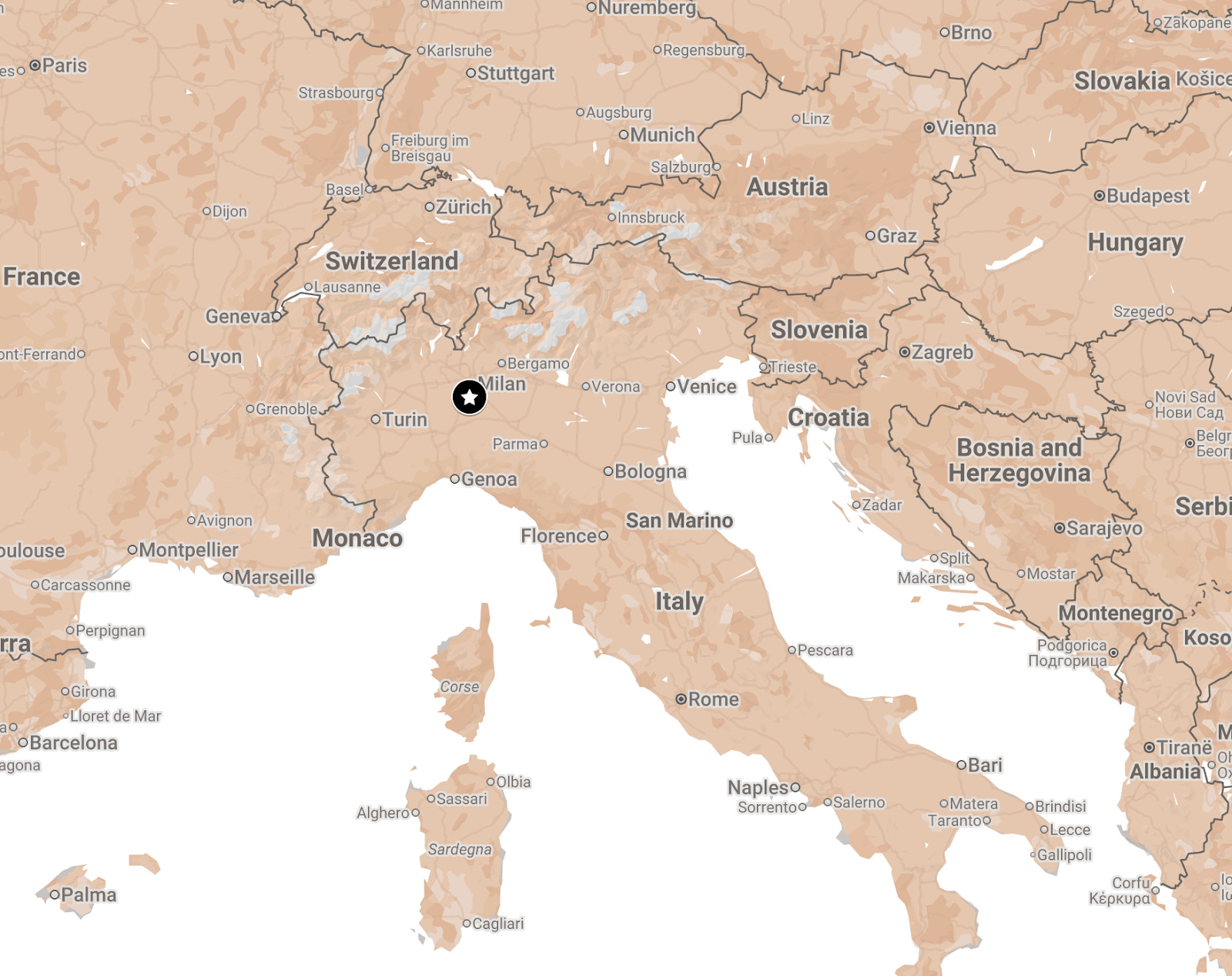
Lacchiarella project underway in Milan, Italy
On 12th of May 2025, CDP and EIF jointly announced a €200 million cornerstone, catalytic investment to Allianz SE subsidiary PIMCO’s European Data Centre Opportunities Fund (EDCO Fund). EDCO fund is a fund set up to support the development of European data centre infrastructure. The data centers will be built by PIMCO’s fully owned subsidiary Apto.
48 hours after the press release, on 14th of May 2025, Apto announced a new project in the district of Lacchiarella close to Milan. The announced project is the largest data center campus in Italy, with estimated square meters of 228,000 with 300 MW power consumption and an estimated € 3.4 billion of total planned investment. Nominally, this seems like a substantial investment to support the development of digital sovereignty in the European Union. Indeed, in the press release of the investment the CEO of CDP noted that
“investment in the PIMCO European Data Centre Opportunity Fund reflects CDP Equity’s strong commitment to accelerating digital transformation and strengthening strategic infrastructure in Italy and across Europe. By supporting data centre development, we are helping to lay the foundations for a more competitive, innovative, and resilient digital economy”,
with the chief executive of the EIF echoing the sentiment noting that the
“investment underscores our commitment to fostering a strong digital ecosystem in Europe. (...) “By supporting the development of data centres, we are not only addressing the immediate demand for data infrastructure, but also laying the groundwork for sustainable growth and innovation in the digital economy.”
However, the structural incentives of the market outlined in this report pose some caveats to the concrete implications of this approach to pursuing strategic sovereignty. Without controls, there is a possibility that instead of challenging the hyperscaler dominance and creating alternative infrastructure, these kinds of interventions unintentionally end up supporting American hyperscalers. In other words, there is a possibility that public capital will be used to finance the buildout of computational infrastructure to be used by US hyperscalers.
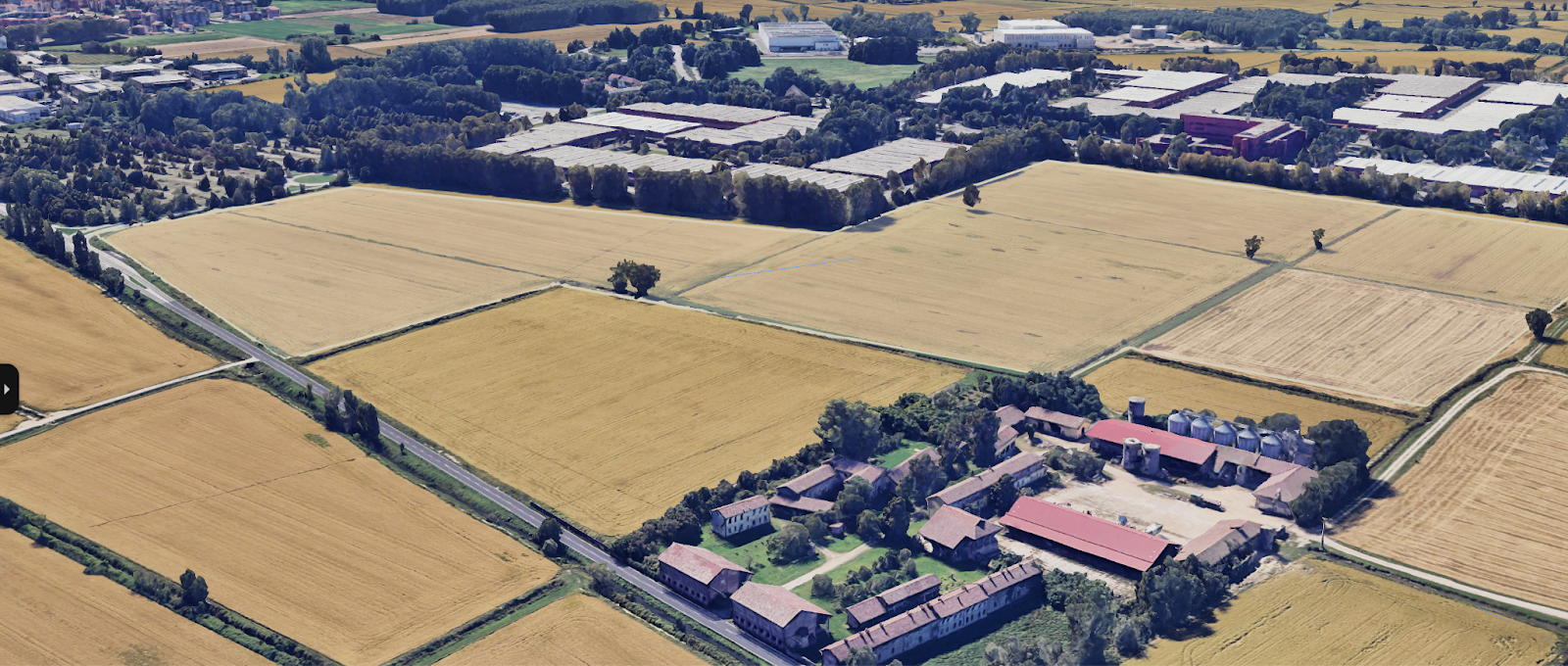
Presumptive location of the site in the fields of Lombardy here
The project does not disclose the intended end user for the site and EIF, CDP and Apto did not respond to our requests for further information on the end user, the connection between the €200 million and the commencement of Lacchiarella project and other details regarding the financing of the project. In the absence of public disclosure, we analyzed the structural incentives that determine plausible outcomes.
First, in order to make a €3.4 bn and 300 MW AI data center bankable by a data center fund, there often needs to be a designated pre-leased anchor tenant contractually bound to the project. We are not aware of any European company that has the scale or capacity to engage in such an offtake agreement. Even pooled and designated demand, such as the Deutsche Telekom Manufacturing AI Cloud, is three times smaller in investment size. From the data center builder perspective, a need for a stable and long term customer makes an American hyperscaler a highly favoured candidate as the end user, over riskier, short-term leases by multiple tenants. This is also driven by the financing conditions of the data centre providers: by having investment-grade tenants in their data centers, their own risk in financial markets is more limited which helps them to secure lower interest rate debt.
Second, the data center builder working on the site, Apto, announces on its website to specialize in manufacturing ‘built-to-suit’ datacenters for hyperscalers. This means custom built data centers that accommodate the specifics of large technology corporations. This further supports the hypothesis of a large hyperscaler end user, as such custom built infrastructures are not fungible and readily repurposable to use by alternative customers. By locking in the infrastructure on spec of the large hyperscalers, the infrastructure is reserved to their capacity.
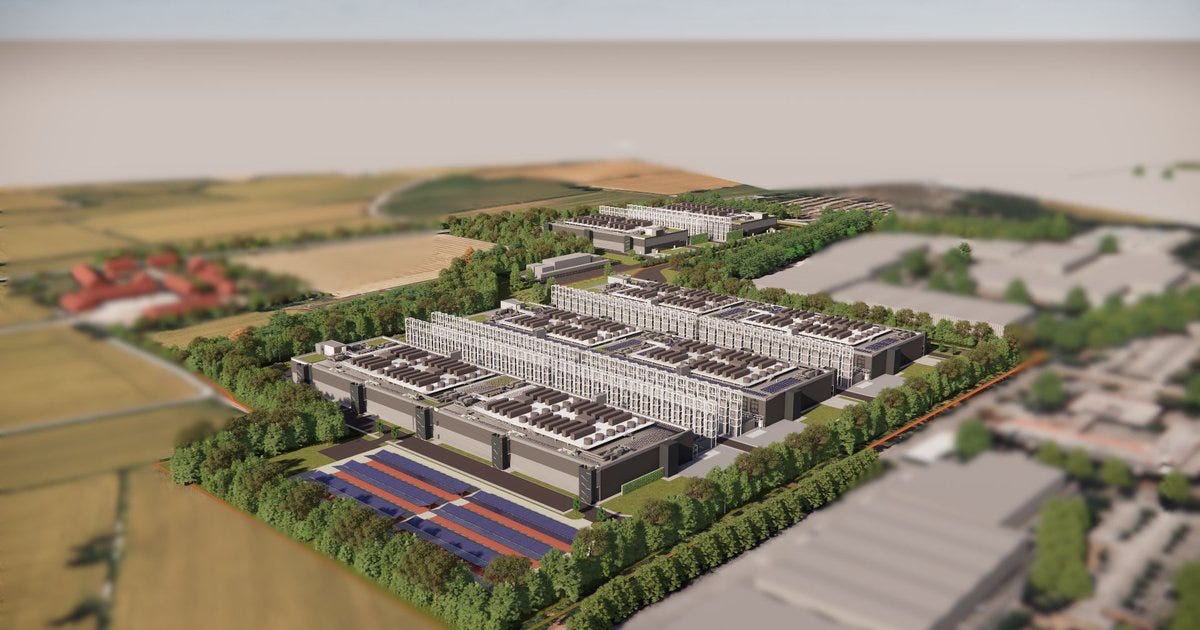
Architecture sketch of the final Lacchiarella site
There are three possible counter-points to our argument: First, that the EIF and CDP cornerstone investment and the almost instantaneous commencement of the work in the Lacchiarella site is a spurious coincidence. Second, that PIMCO EDCO is willing and able to invest in a €3.4B data center project without a prospective client in mind, hoping to crowd in demand as the data center will be ready, in a wholesale or retail business model. Third, it is also possible that Apto, instead of using their existing process knowledge tailored to hyperscaler customers, uses general modular blueprints for the site to ensure that multi-tenant strategy remains feasible. We find these cases unlikely, but absent further information we cannot conclusively confirm or falsify this scenario.
For the purposes of this analysis, this suffices to note the challenges of horizontal industrial policy, such as fund portfolio investments, in developing alternative infrastructures in the captured AI market. The gravitational pull of the computational market, and the incentives for everyone involved, create structural advantages for the existing hyperscaler infrastructure. As the investment risk is high, and the amounts astronomical, the safest (and most profitable) bet is to entangle with the existing incumbents.
While the EIF’s InvestEU mandate is linked to the development of European strategic technologies, the realities of data center finance mean that these objectives are shaped and channelled towards existing hyperscalers. This reformulates the essence of “strategic” technology away from infrastructural sovereignty to more superfluous considerations such as data residency. While nominally in line with the strategic objectives by creating an European owned (Apto) and European domiciled (Lacchiarella, Italy) data center infrastructure, the de facto service dependency still remains with the U.S hyperscalers.
Whether this is a problem depends on your perspective. For the (partly European) financial intermediaries the data centre development project is a lucrative opportunity, with stable and predictable cash flow resulting from the exposure to the AI investment supercycle driven by hyperscalers. From the perspective of the balance sheet of the EIF, the stable and secure interest income rent from the hyperscaler can be used to finance other important initiatives.
This portfolio-investor mindset suggest tension between the realities of data center capitalism and policy objectives of supporting alternative European infrastructures to emerge: if the only data center infrastructure investment in the balance sheet of EIF in 2025 turns out to be support for an American hyperscaler buildout in Italy, the challenges for developing alternative European computational infrastructure are apparent.
PS.
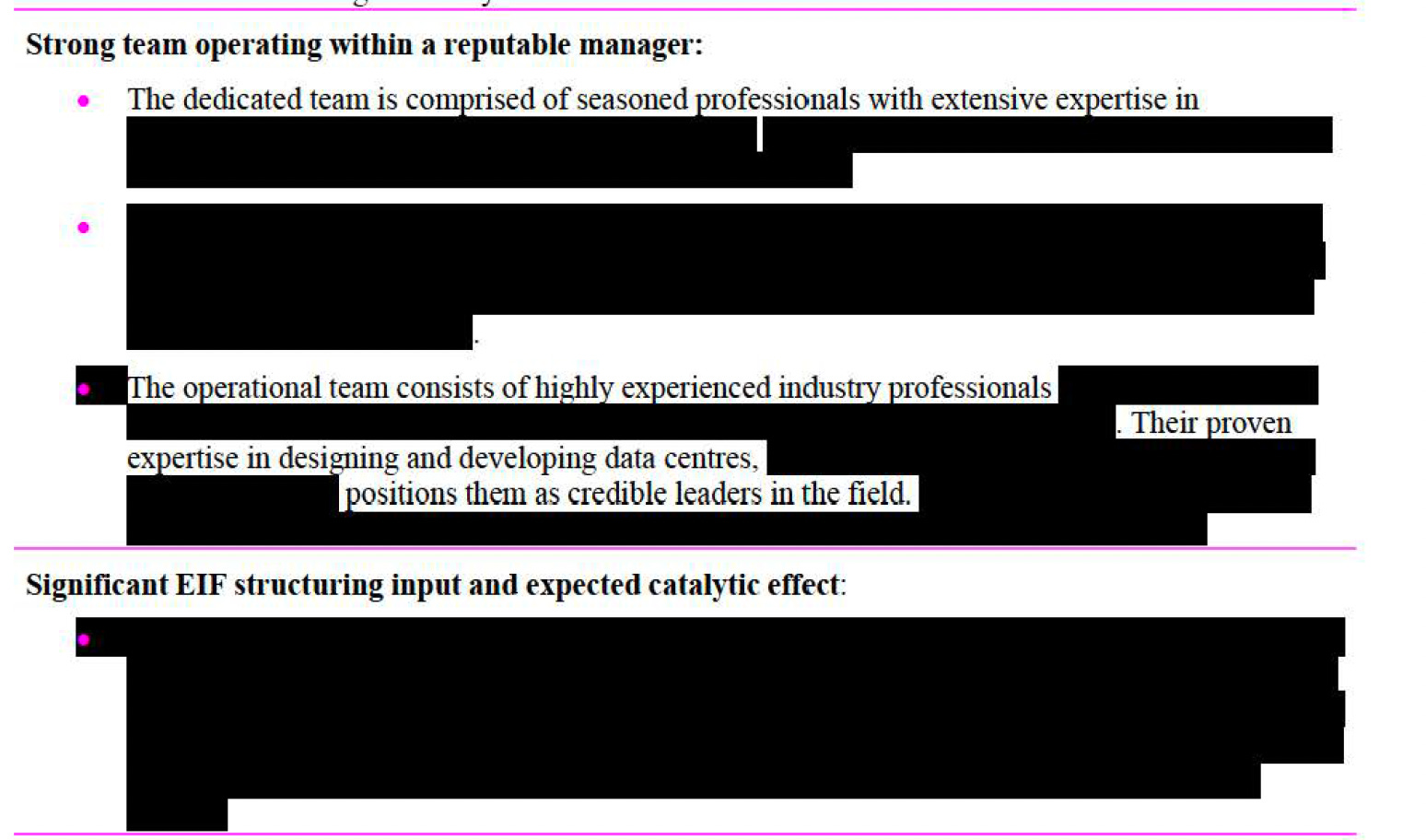
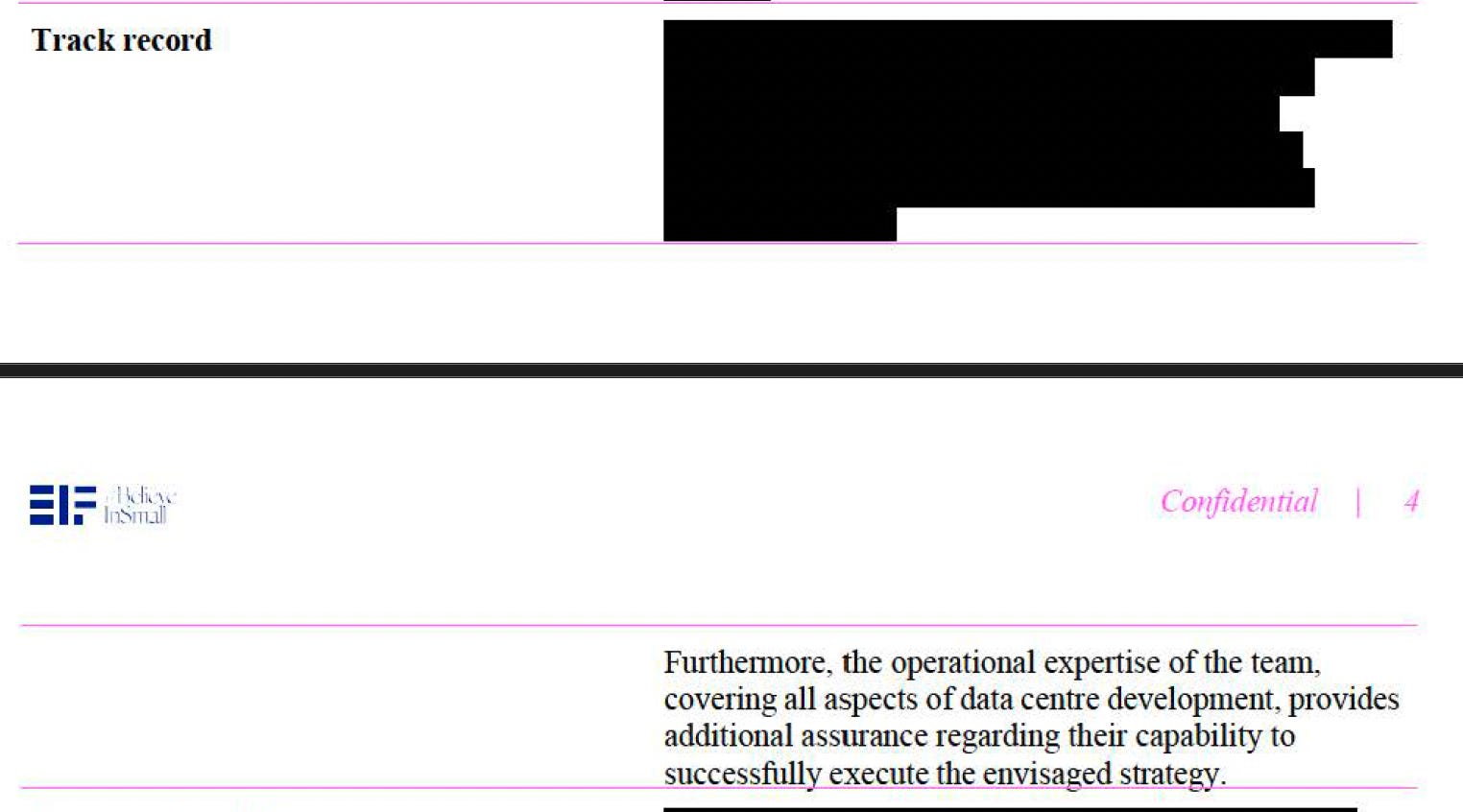
EIF did respond to our FOI request on specified questions on 26th of February 2026 by sending over the Request for Approval document presented to the EIB Board of Directors as the original proposal to participate in the EDCO fund on March 20 2024. Find below representative samples of the disclosure received.
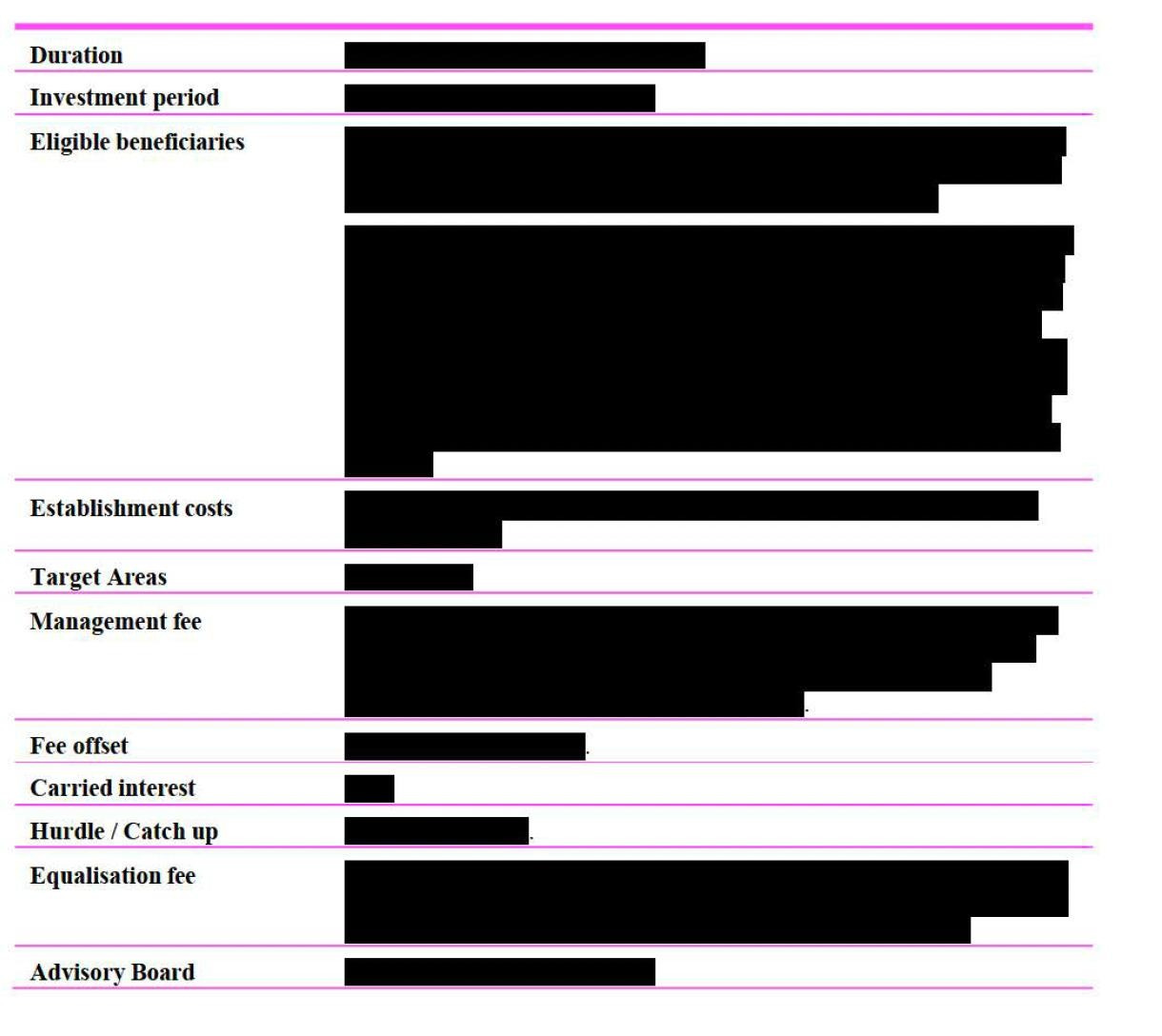
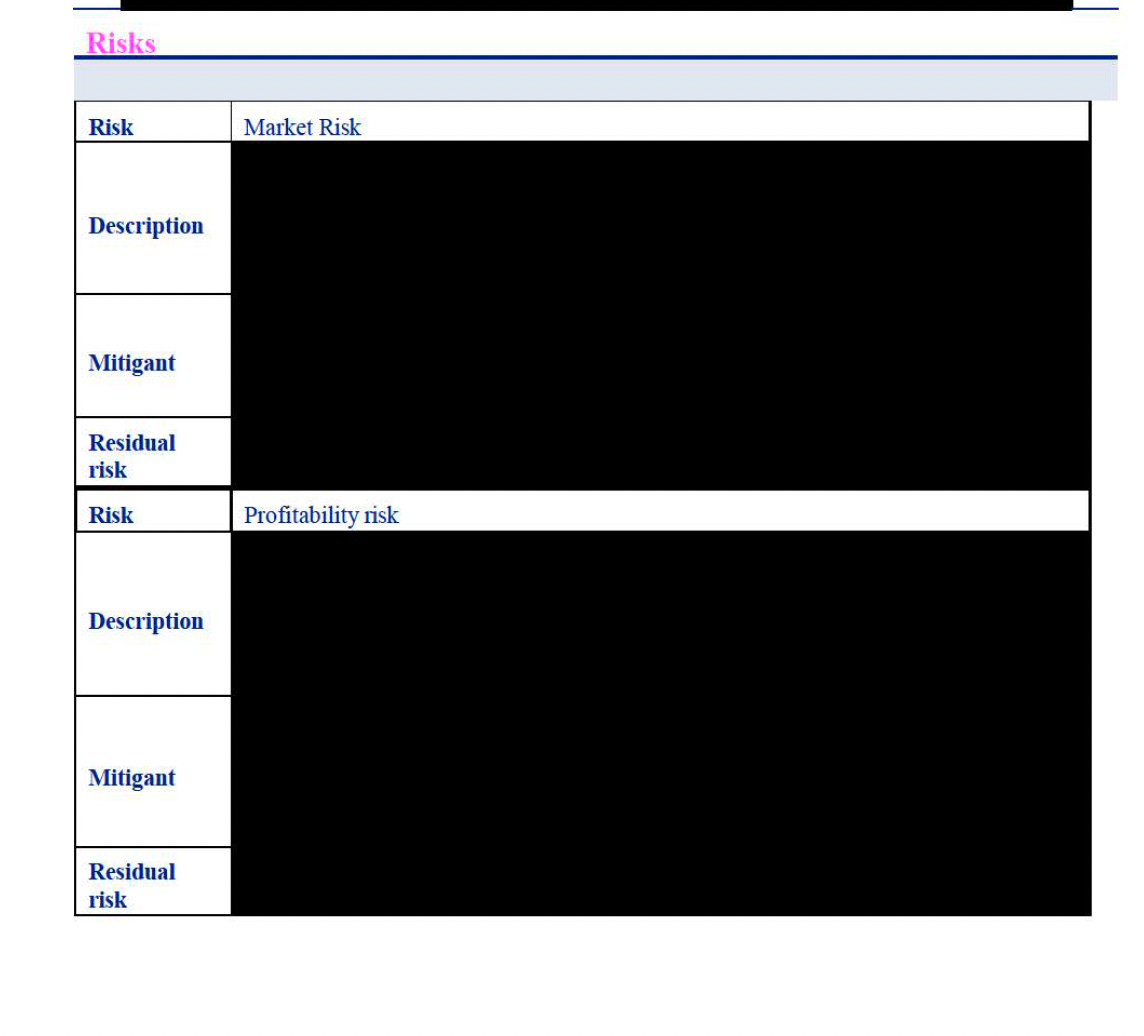
We are delighted to see that the fact that the team at PIMCO consists of “seasoned professionals” with “extensive expertise” is disclosed systematically across the otherwise highly redacted documents.